Step 1
Check-in on your sleep quality, quantity, and energy levels over the last week.
Analytics & error reporting
We use privacy-friendly analytics and error reports to improve the site. Turn this on to share anonymous usage data.
More minutes, better rhythm, easier mornings.
Sleep is the foundation of everything you care about—mood, performance, healing, and resilience. But when it’s broken, “trying harder” usually makes it worse. Brandon helps you build routines and environments that support deep rest by focusing on the nervous system, light, temperature, and safety—helping you reclaim your nights without stressful perfectionism or all-or-nothing rules.
Poor sleep isn’t just being tired. It’s a constant, low-grade alarm bell that affects your patience, your pain levels, and your ability to show up for your life.
Most sleep advice focuses on the last hour of the day—put down the phone, take a pill, cool the room. While those matter, sleep is actually a 24-hour cycle. If your nervous system doesn’t feel safe enough to let go, no amount of lavender spray or tracking data will fix it. Brandon looks at the whole picture: your light exposure, meal timing, stress load, and ability to downshift.
What’s really going on:
Brandon treats sleep as a skill and a biological rhythm, not a moral failing. The goal is to remove the friction and fear around bedtime so your body’s natural drive for rest can take over.
4-step process
Sleep starts when you wake up. You’ll look at light exposure, caffeine timing, movement, and stress spikes throughout the day to see what’s pushing your clock off-track.
Find the specific cues (temperature, routine, breathwork, environment) that tell your nervous system, “It is safe to turn off now.” This shifts you from fight-or-flight into rest-and-digest.
Test small, sustainable adjustments—like a consistent wake time, a 'digital sunset,' or a specific wind-down ritual—that don't require massive willpower to maintain.
Learn how to handle wake-ups without spiraling into anxiety. You’ll build a toolkit for getting back to rest (or just resting calmly) so one bad night doesn’t wreck your week.
Recovering your sleep isn't about hitting a perfect 'Sleep Score' every night. It's about trusting your body's ability to rest and having the energy to handle your days.
Falling asleep within 15–20 minutes without a struggle.
Waking up feeling refreshed and actually ready to get out of bed.
Fewer middle-of-the-night wake-ups, or falling back asleep quickly if you do wake.
Stable energy throughout the afternoon without a massive crash.
Less anxiety as bedtime approaches—bed becomes a sanctuary, not a stressor.
Knowing exactly what to do if you have an 'off' night so you don't panic.
Sleep deprivation colors every part of your life—your patience, your drive, your health. It’s hard to solve it with the same exhausted brain that’s keeping you up.
You don't need another gadget or a stricter rule. You need a strategy that works with your biology. If you're ready to stop fighting the night and start rebuilding your rest, Brandon is here to help.
Sleep sessions are practical and investigative. Brandon helps you de-construct your nights without judgment. You don't need a perfect sleep log—just your honest experience of what's happening.
Shape of a typical session:
Check-in on your sleep quality, quantity, and energy levels over the last week.
Review of your 'experiments' (e.g., did moving dinner earlier help? Did the wind-down routine stick?).
Troubleshooting specific obstacles: racing thoughts, partner disturbance, travel, or stress spikes.
Adjusting the plan based on real-world feedback—if something isn't working, we change it.
Education on sleep biology when helpful, so you understand *why* we're trying a specific tool.
About Your Coach
Brandon Day is a Pain and Performance Coach who views sleep as the ultimate performance enhancer and the bedrock of health. He understands that 'try harder' is terrible advice for an insomniac. Instead, he combines circadian biology, nervous-system regulation, and behavioral psychology to help you get out of your own way and let sleep happen. He helps you build a lifestyle that protects your rest, even when life gets busy.
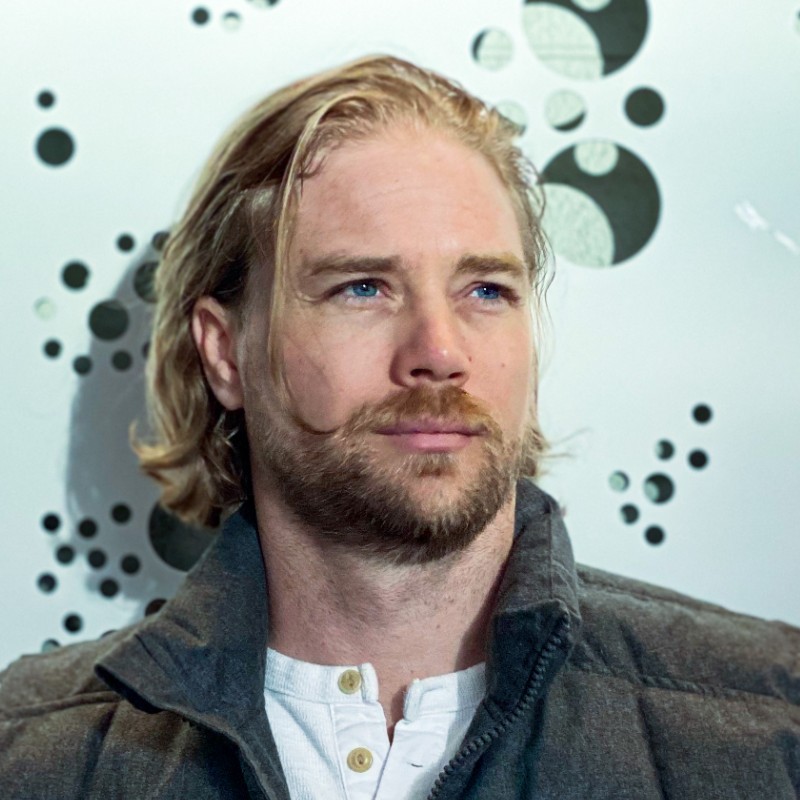
Insomnia and sleep fragmentation, circadian rhythm optimization, nervous-system regulation, stress management, fatigue recovery, sustainable high performance.
1:1 remote sessions, data-informed but not data-obsessed, emphasis on behavioral and environmental changes, compassionate troubleshooting, coordination with medical providers if sleep apnea or other clinical issues are suspected.
“I used to dread bedtime. I’d lie there for hours. Brandon helped me stop 'trying' to sleep and start building a routine that actually made me sleepy. I’m sleeping 7 hours consistently for the first time in a decade.”
Common Questions
Maybe. If you snore loudly, gasp for air, or stop breathing during sleep, these can be signs of sleep apnea, which requires medical diagnosis and treatment. Brandon is trained to screen for these red flags and will refer you to a doctor if needed. For many people, however, sleep issues are behavioral or stress-related, which is where coaching shines.
Not necessarily stop, but almost certainly adjust. Caffeine has a long half-life and blocks the chemical signal for sleepiness. We will look at your timing and dosage to ensure it's not sabotaging your night, finding a balance that lets you enjoy your morning ritual without wrecking your recovery.
Shift work is tough on biology, but you can still optimize it. We focus on 'anchor sleep,' managing light exposure strategically, and rigorous recovery protocols to mitigate the impact. You might not get perfect sleep, but we can definitely make it better and protect your health.
Brandon uses principles from Cognitive Behavioral Therapy for Insomnia (CBT-I), such as sleep restriction and stimulus control, but he applies them within a broader coaching framework. If you have severe chronic insomnia that requires clinical psychological treatment, he can help you find a specialist or support you alongside that therapy.
No. In fact, for some people, trackers increase anxiety (orthosomnia). If you already use an Oura Ring, Whoop, or Apple Watch, we can use that data to look for trends, but subjective feeling—how you feel when you wake up—is often the most important metric.
It varies. Some clients see massive improvements in 2–3 weeks just by fixing light and temperature. For deeper circadian mismatches or high-stress patterns, it might take 2–3 months of consistent practice to reset the rhythm. We build the plan around your pace.
Sessions are primarily online via secure video. This works perfectly for sleep coaching as we often discuss your home environment, bedroom setup, and evening routines, which are easy to assess remotely.
Ready to get started?
Start Relief Switch Free